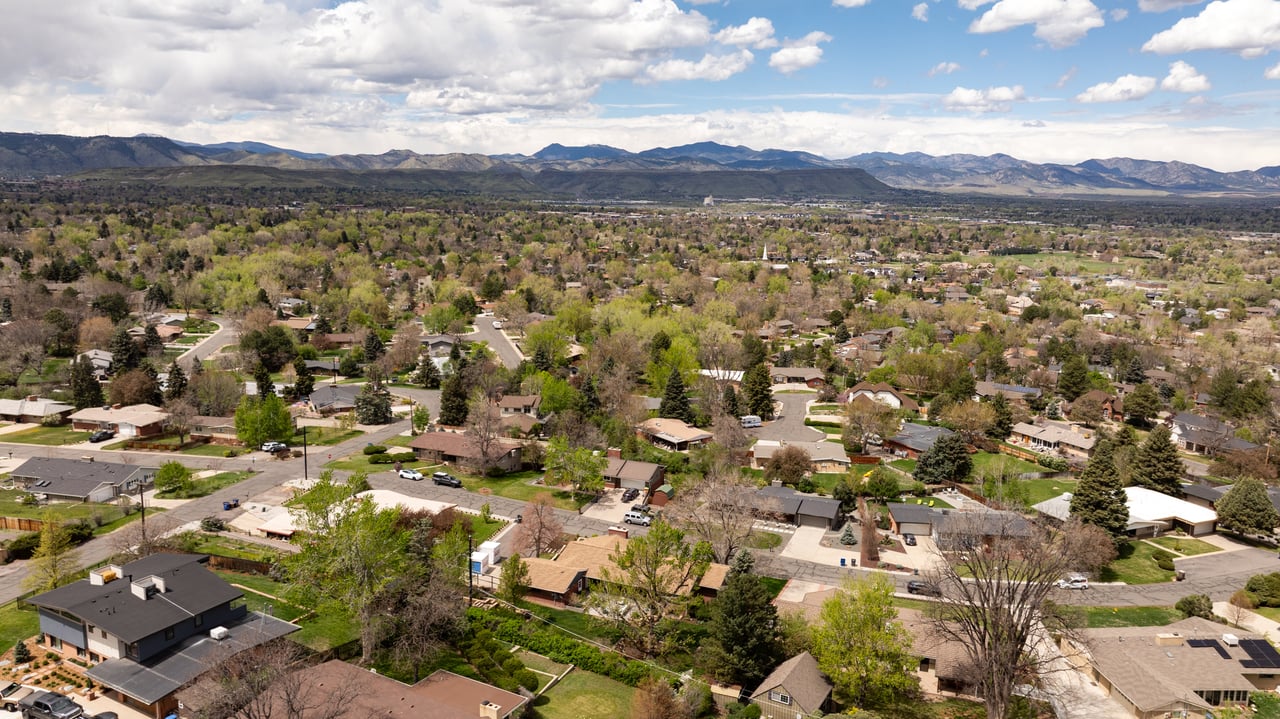
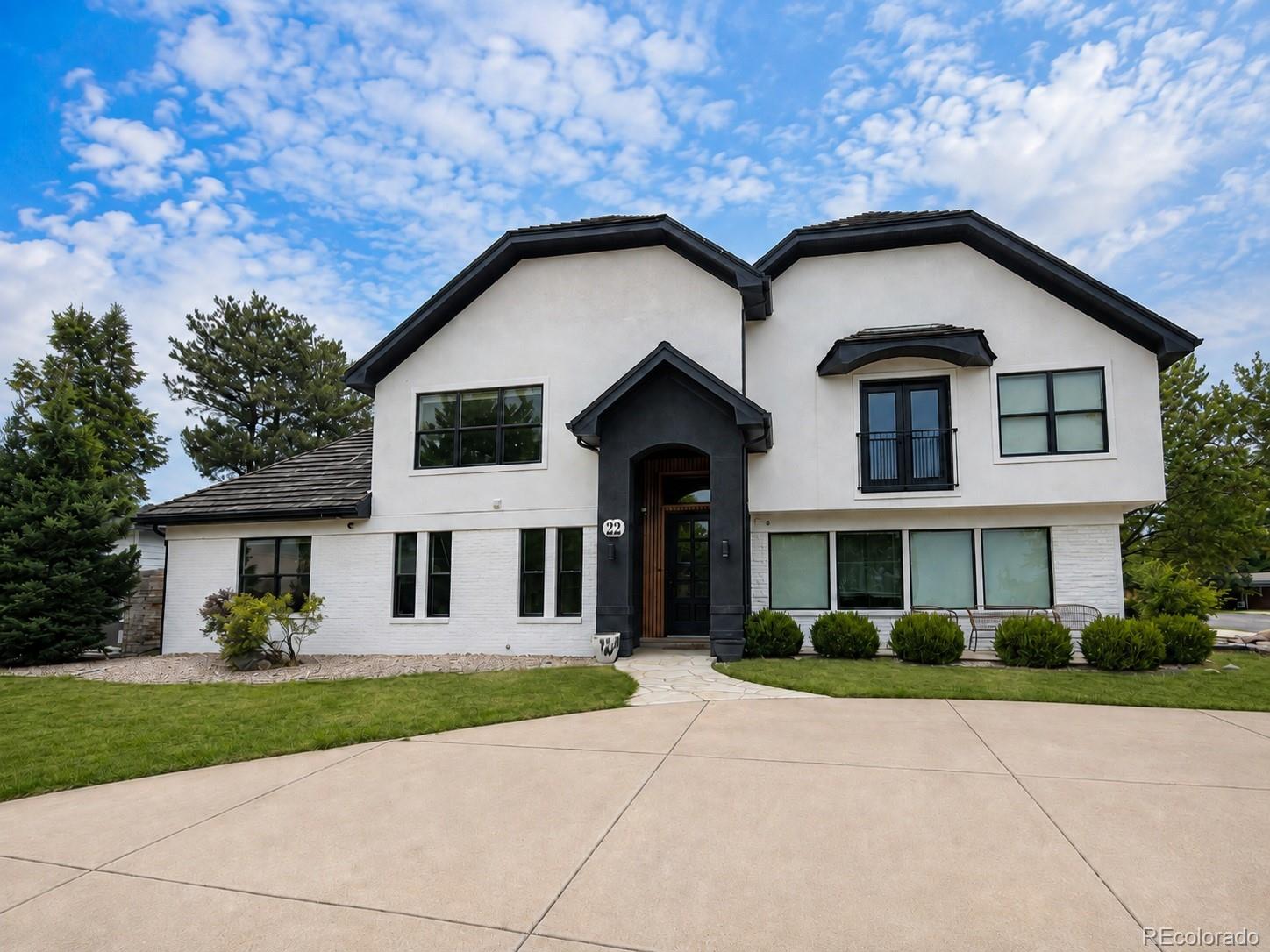
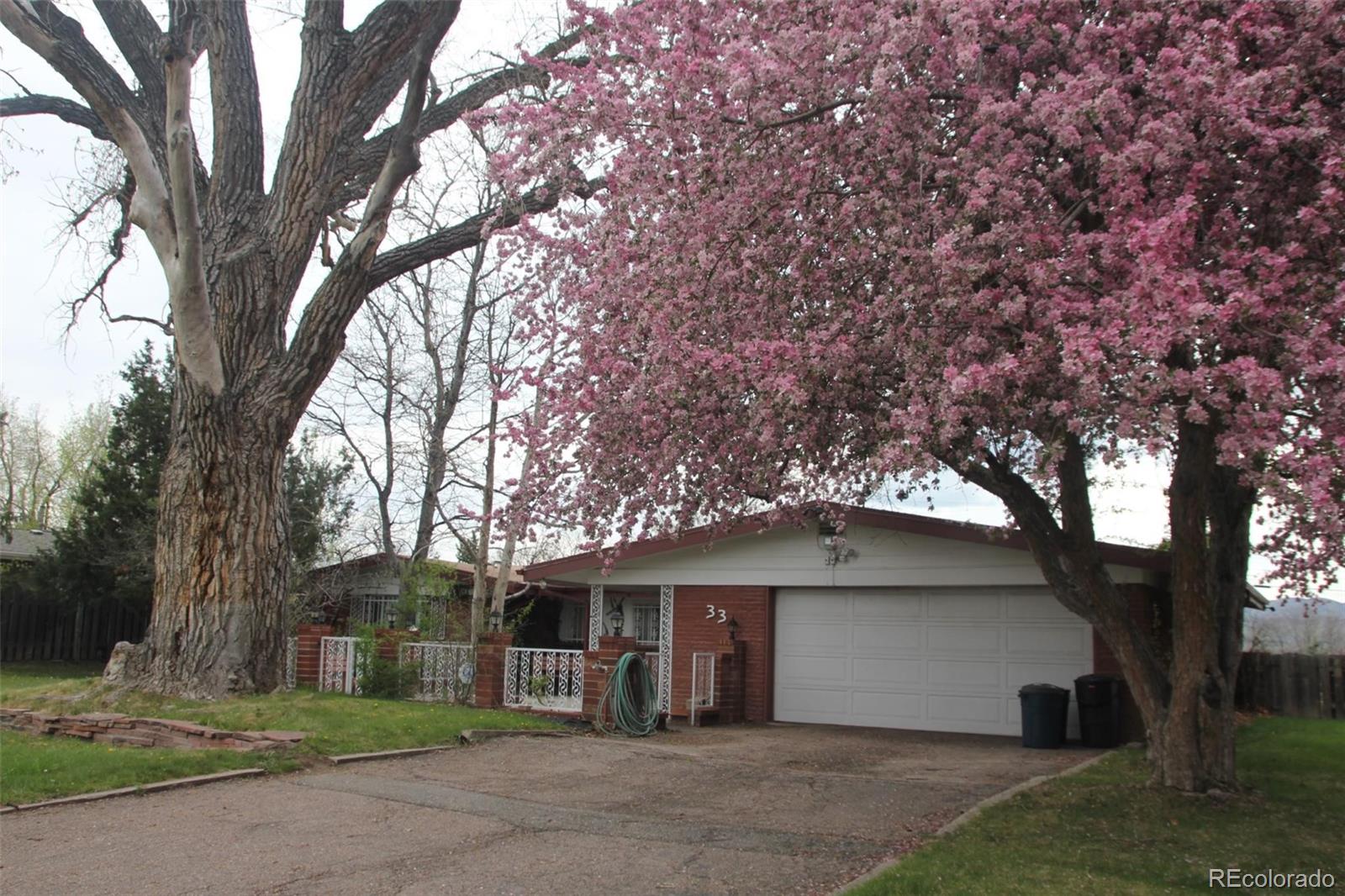
Paramount Heights is a mid-century modern neighborhood in Wheat Ridge, Colorado, built mostly between 1954 and the early 1970s on the rise above Crown Hill Lake. It is roughly [X] homes, mostly ranches, on lots that run close to a third of an acre, with foothills views that were the entire sales pitch in 1956 and are still the reason people pay a premium to live here.
If you have driven Kipling and wondered what is up on that hill with all the flat roofs and the long low rooflines, this is it.
City / ZIP | Wheat Ridge, CO 80215 |
Built | 1954 to early 1970s |
Developer | Lee Doud |
Architect | Copeland Designs (Curtis "Cope" Copeland) |
Home styles | Mostly ranch. Some bi-level, tri-level, split-level, and a handful of two-story |
Size range | Roughly 1,300 to 4,000 finished sq ft |
Typical lot | Around 1/3 acre |
Basements | About half the homes have one. Of those, about half are walk-outs |
Median sale price | $1,282,000, trailing 12 months as of August 2026 |
Homes sold last 12 months | 12 |
Lee Doud was not building starter homes. He was the son of Alexander Doud, a well-known Denver attorney and businessman who sat as the oldest trustee at the University of Denver, and Lee grew up around that kind of money and civic connection. When he started laying out Paramount Heights in the mid-1950s, the stated ambition was a Jefferson County answer to Cherry Hills. Elevated lots, real architecture, shopping, parks, the whole package.
He hired Copeland Designs, a young modernist firm, and Curtis "Cope" Copeland ended up penning most of what you see on the hill. Copeland also drew the Gold's Grocery shopping center and the bowling alley between 1958 and 1964, which is why the neighborhood and its commercial corner actually look like they belong to each other. In 2019 the Wheat Ridge Renewal Authority designated Gold's Grocery as historically significant, which is a nice way of saying somebody finally noticed.
The first of the showpiece homes, 30 Hillside Drive, went up in 1954 with what the marketing at the time called "party parking." That is exactly what it sounds like: extra driveway built for the cocktail crowd. The 1956 advertising promised buyers a hundred-mile panorama running from Longs Peak to the Snowy Range in Wyoming. Stand in the right front yard on a clear February morning and that ad still holds up.
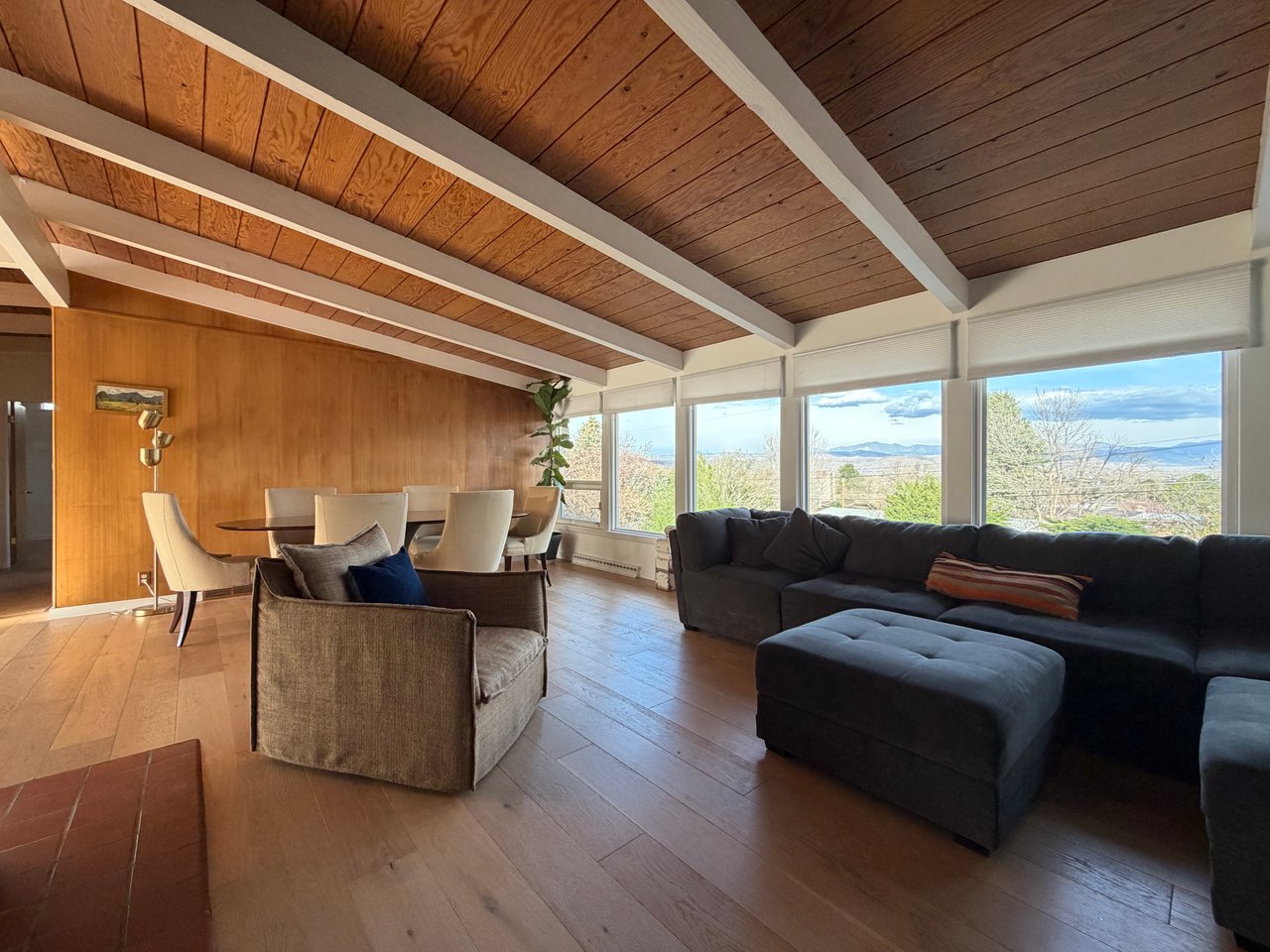
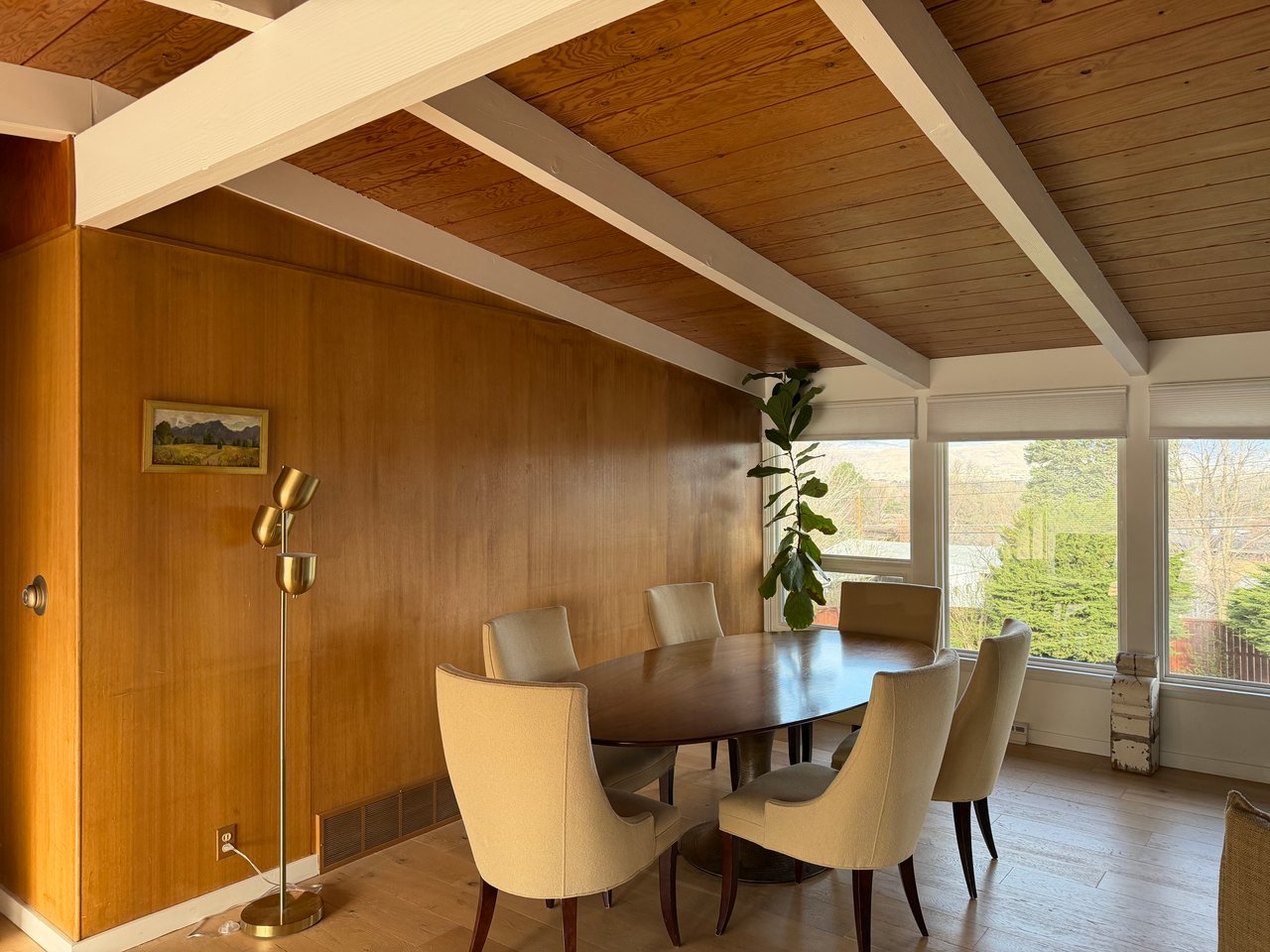
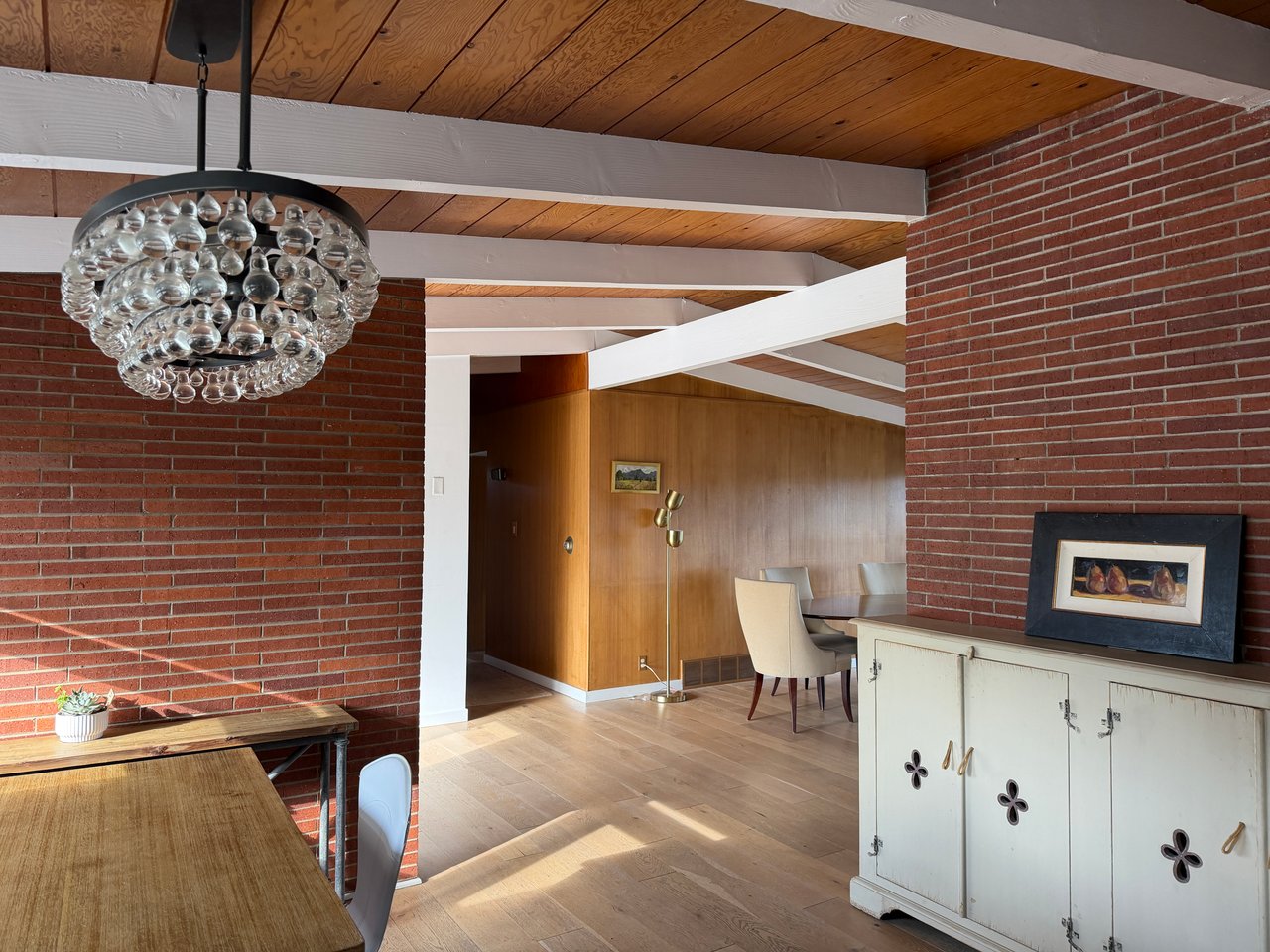
The ranch is the workhorse here. Long, low, brick or brick-and-siding, big front-facing windows aimed at the mountains, and a floor plan that assumes you own a station wagon. Three bedrooms up is typical, four if the original owner finished the basement.
The custom pocket is where it gets interesting. Copeland's better work on Hillside, Skyline, and Rangeview includes International Style homes with flat roofs, clerestory windows, terrazzo, and glass walls that were genuinely ahead of their time for a Denver suburb. A few of these are close to original. A few have been renovated well. A few have been flipped badly, and you can tell from the driveway.
Lot size is the sleeper feature. A third of an acre in a location this close in is rare. You get real separation from your neighbor, mature trees that are now seventy years old, and room for a shop or an ADU if the setbacks cooperate.
Nobody else writing about this neighborhood will tell you this part, so here it is.
Sewer. Cast iron and clay lines from the 1950s and 60s. Scope it. Every time. A line replacement under a mature yard is not cheap and it is not rare.
Electrical. Original panels are undersized for how people live now. Some homes still have aluminum branch wiring from the late 60s and early 70s builds, which is a real insurance conversation.
Flat roofs. Beautiful, and a maintenance item forever. If you are buying one of the International Style homes, get a roofer who has actually worked on a flat membrane, not a shingle guy guessing.
Windows. A lot of these homes still wear original single-pane aluminum. Replacing them is expensive and, on the architecturally significant houses, worth doing carefully rather than cheaply.
Asbestos and lead. Popcorn ceilings, floor tile, pipe wrap, original paint. Standard for the era, manageable, but budget for it if you are renovating.
Renovated versus flipped. The premium homes on this hill have been renovated with respect for what they are. The disappointing ones got gray LVP and a farmhouse sink dropped into a Copeland floor plan. Learn to tell them apart before you fall in love at an open house.
You are sitting between Crown Hill Park and the foothills, which is a good place to sit.
Crown Hill Lake and Open Space is right there, 242 acres of trail, water, and a wildlife refuge that is genuinely quiet on a weekday morning. Kipling and 32nd get you anywhere in the metro. I-70 is minutes away, which means downtown Denver one direction and Golden, Genesee, and the tunnel the other.
For me that last part is the whole argument. I moved out this way for the same reason my clients do. Apex, White Ranch, Green Mountain, and Dakota Ridge are all a short drive, and the Peaks to Plains trail keeps getting longer. Paramount Heights is one of the closest-in Denver metro neighborhoods where you can be on real singletrack in under twenty minutes and still make a 9 a.m. downtown.
Inventory here is thin. In a neighborhood this small, a handful of sales a year sets the whole comp set, which cuts both ways. Sellers get scarcity. Buyers get very few shots.
That is why so much of what trades here never makes it to the MLS in a meaningful way. I work this hill directly: mailers, door conversations, and a standing list of buyers who have told me exactly what they want. If a Copeland original with an intact kitchen comes up, I usually hear about it before it has photos.
Wheat Ridge. Paramount Heights sits on the high ground west of Kipling and north of Crown Hill Park, in Wheat Ridge, Colorado, 80215. Its southern edge borders Lakewood, which is where the confusion comes from, and you will find listing sites and even a few local pages that get it wrong. The neighborhood is Wheat Ridge.
Yes. It was developed by Lee Doud starting in 1954 and largely designed by Copeland Designs, with construction running into the early 1970s. Ranch is the dominant style, with a cluster of architecturally significant International Style custom homes.
No, there are old covenants that expired years ago and when they expired they allowed homeowners to build second stories on their ranch homes which has been a point of contention for some neighbors.
Median sale price is $1,282,000 over the trailing 12 months as of August 2026 with a typical range of $655,000-$1,960,000 depending on size and condition.
Prospect Valley or Maple Grove Elementary, Everett Middle School, and Wheat Ridge High
Individual homes are not automatically protected. The Gold's Grocery center was designated historically significant by the Wheat Ridge Renewal Authority in 2019, and some individual properties have pursued designation on their own. If preservation matters to you, that status is worth checking address by address.
Applewood is larger in it's entirety, doesn't live on a hill where many lots have big views, and varies more widely in architecture. Paramount Heights is smaller, higher, more architecturally consistent, and closer to Crown Hill. A lot of my clients look at both. Applewood Neighborhood Page
I live nearby in Applewood and have many friends/clients in the neighborhood. I also farm, cold call, and invest in sourcing off-market opportunities here year round. If you want to know what your home on this hill is actually worth, or you want to be on the list when the next good one comes up, let's talk.
Jon Mottern, Broker Associate The Source at Serhant 720-498-3555 [email protected]
Limited turnover means some Paramount Heights opportunities are discussed privately before they reach the open market. Through neighborhood relationships, direct outreach, past clients, agent connections, and direct targeted mailer campaigns, Jon helps qualified buyers explore homes that may not yet be publicly available.
For homeowners, a private sale can sometimes offer greater flexibility, privacy, or control over timing. It is not the right approach for every property, so Jon helps sellers compare the advantages of an off-market transaction with the potential benefits of full public exposure.
Many Paramount Heights buyers are drawn from northwest Denver neighborhoods such as Berkeley, West Highland, Sunnyside, and LoHi. They often want more space, larger lots, greater privacy, mountain views, and easier access to Golden and the foothills without feeling disconnected from Denver.
Jon’s experience on both sides of that move allows him to help clients compare neighborhoods, evaluate financial and lifestyle tradeoffs, and coordinate the sale of one home with the purchase of the next.
He also assists clients comparing Paramount Heights with Applewood, Golden, Green Mountain, and other western suburban neighborhoods.
Whether you are preparing to sell, searching for a mid-century home, or interested in opportunities that may not yet be publicly listed, Jon can help you understand the Paramount Heights market and build a clear strategy.
Jon helped us find and purchase the right home off-market in Paramount Heights. His knowledge of the neighborhood and the broader Wheat Ridge market was invaluable, and his network of trusted contractors, inspectors, and lenders made the process feel efficient and turnkey.
— Devon, Paramount Heights buyer
Although Jon represented the buyers, he treated everyone involved with fairness and professionalism. His communication, negotiation skills, and cooperative approach helped create a smooth off-market transaction that worked well for both sides.
— Dee, Paramount Heights seller