Wheat Ridge occupies a sweet spot that I understood long before I started describing it to clients: close enough to Denver to stay connected to the neighborhoods you love, but far enough west to gain space, larger lots and easier access to the foothills.
My wife and I bought our first house in East Wheat Ridge largely for those reasons. We wanted more land than we were finding in Denver, but we weren't ready to give up the lifestyle we enjoyed around Berkeley, Tennyson Street and the Highlands. Wheat Ridge gave us a larger lot and a little more breathing room while keeping those neighborhoods just a few minutes away. At the same time, we were noticeably closer to the mountains.
We eventually gut renovated that house and later converted it into a rental.
As our family grew, so did what we wanted from a home.
In late 2019, while we were expecting our first child, we moved farther west into Applewood Villages in Wheat Ridge. We bought a larger house, gained more space for the family, and found an elementary-school situation that was a better fit for us. Then we did it all over again and gut renovated that house too.
That progression—from Denver-adjacent Wheat Ridge to western Wheat Ridge—is a big part of how I understand this market today.
I haven't just sold houses here. I've made the same decisions many Wheat Ridge buyers are trying to make.
The appeal of Wheat Ridge isn't that it offers one specific lifestyle. It's that it allows buyers to choose how far they want to move toward the foothills without completely disconnecting from Denver.
For us, that balance was the whole point.
Living in East Wheat Ridge meant we could still quickly get into Berkeley, Tennyson and the Highlands, while having a larger property than we likely would have purchased for the same money farther east.
Moving into Applewood shifted the balance a little farther west. Denver was still accessible, but Golden, the foothills, trails and western Jefferson County became a larger part of our everyday life.
Wheat Ridge's location is one of the characteristics the city itself emphasizes: access to Denver, major highways and the Rocky Mountains is a defining part of the community.
For buyers coming from Northwest Denver in particular, Wheat Ridge can feel less like leaving Denver and more like stretching the same lifestyle farther west.
This is one of the most important things I explain to buyers.
Searching for a “home in Wheat Ridge” covers a surprisingly broad range of neighborhoods, housing styles, lot sizes and locations.
East Wheat Ridge is one of the areas I think makes the easiest transition for someone coming from Berkeley, West Highland or Sloan's Lake.
You're very close to Northwest Denver, but the development pattern begins to change. Lots can get larger, streets can feel less urban, and buyers often find homes with more yard and separation between neighbors.
That's exactly what attracted us to our first Wheat Ridge house.
For someone who loves Tennyson Street but doesn't necessarily need to live within walking distance of it anymore, East Wheat Ridge deserves serious consideration.
Moving west, Wheat Ridge becomes a mixture of established residential pockets, mid-century homes, larger parcels, commercial corridors and newer redevelopment.
One thing buyers sometimes misunderstand is that Wheat Ridge didn't develop all at once as a master-planned suburb. Its roots were agricultural, with farms, orchards and eventually large greenhouse operations. Wheat Ridge was once known for its enormous carnation-growing industry before incorporating as a city in 1969.
That history helps explain why the city's street patterns, lot sizes and housing stock can change considerably over relatively short distances.
This is where Wheat Ridge starts to feel increasingly connected to Golden and the foothills.
Applewood was the natural next move for our family.
The houses tend to offer more of what many growing families start looking for: additional square footage, established neighborhoods, larger lots in many pockets, mature landscaping and quick access west.
It also changes your weekend geography.
Instead of always heading toward Denver, Golden starts becoming just as natural a destination.
That was certainly true for us.
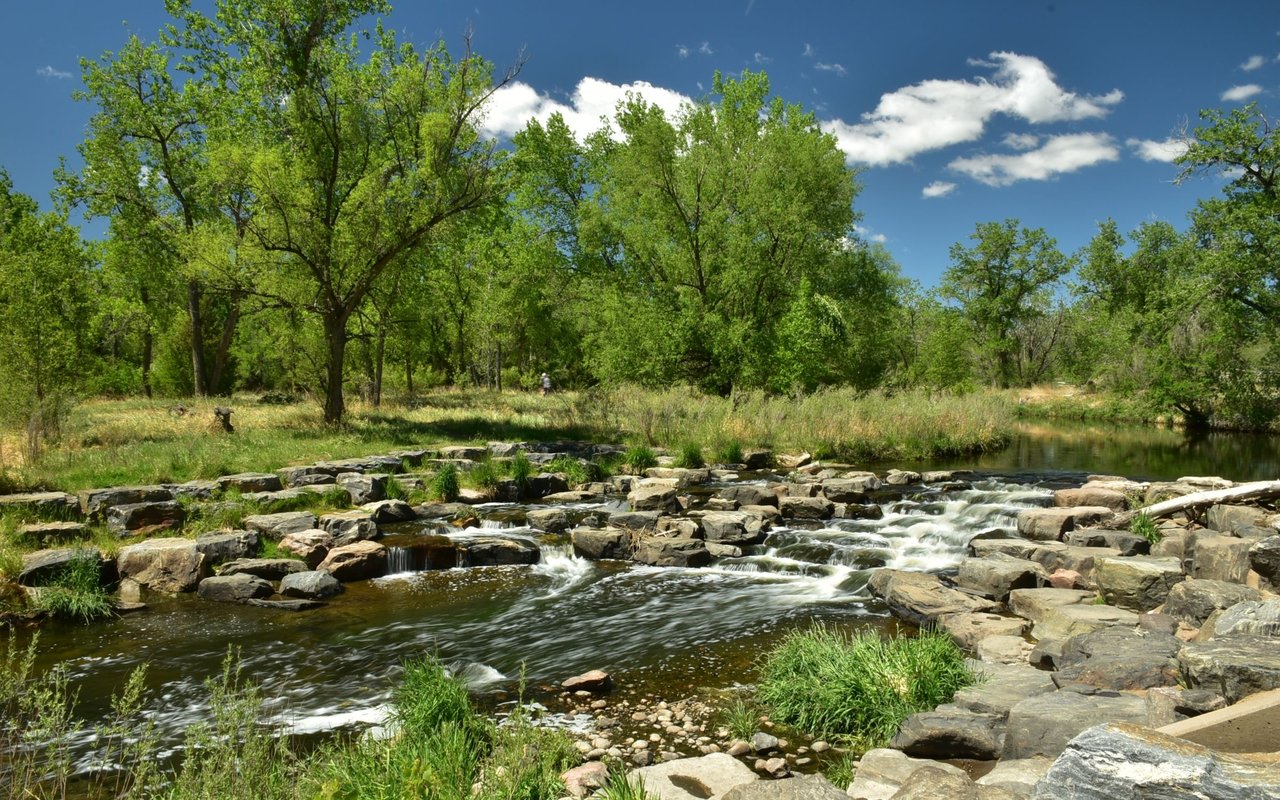
One of my favorite parts of living in Wheat Ridge wasn't something we thought much about when we initially bought our house: Clear Creek.
When our daughter was young—and later as our family grew—we spent a lot of weekend mornings along the creek. Sometimes there wasn't any elaborate plan. We'd head down, walk around, let the kids skip rocks and spend some time near the water.
Those simple routines became part of living here.
The Clear Creek Greenbelt runs through the northern part of Wheat Ridge and preserves a significant natural corridor along the creek. The city continues to invest in this area, including recent trail improvements around Tabor Lake.
For biking, running, walking with kids or simply having somewhere nearby that doesn't feel particularly suburban, the creek is a real asset.
And from parts of Wheat Ridge, Clear Creek also becomes a connection west toward Golden rather than simply a neighborhood trail.
One of the biggest lifestyle changes we noticed after moving farther west was how frequently we started going into Golden.
Breakfast on a weekend, taking the kids downtown, getting outside or heading toward the foothills became incredibly easy.
That's one of the reasons I often evaluate Wheat Ridge and Golden together for buyers.
They aren't substitutes for one another—the housing and communities are different—but someone considering western Wheat Ridge should understand just how accessible Golden becomes.
For people who work in Denver but spend their free time hiking, mountain biking, skiing or simply heading west, that geography can make a surprisingly large difference in everyday life.
Wheat Ridge has considerably more variety than buyers sometimes expect.
Depending on the part of town, you'll find:
That variety is one of the reasons I don't find citywide averages especially useful when evaluating a Wheat Ridge property.
A remodeled home on a large lot in one pocket may compete with an entirely different buyer pool than a similarly sized house a mile or two away.
Micro-location matters here.
Lot quality, orientation, school assignment, condition, access to I-70, proximity to commercial corridors and how far east or west you are can all materially affect how buyers perceive a property.
I've also experienced Wheat Ridge from the renovation side.
We gut renovated both of the homes we owned here, first in East Wheat Ridge and later in Applewood Villages.
That experience affects the way I look at houses for clients.
A dated Wheat Ridge ranch on a good lot can be an entirely different proposition from a house where the location itself is the compromise. Cosmetic problems can be changed. Floor plans can sometimes be changed. Kitchens can absolutely be changed.
You can't renovate the lot or move the house.
In neighborhoods where much of the housing stock is several decades old, understanding that distinction can be extremely valuable.
Wheat Ridge is served by Jefferson County Public Schools, but school assignments vary considerably depending upon the property.
Schools were an increasingly important consideration for us as our family grew, and our move west into Applewood gave us an elementary-school fit that worked better for our family.
I would not recommend choosing a Wheat Ridge neighborhood based solely on the city's name—or even a real estate listing's school information. Boundaries and enrollment policies should always be verified directly for a particular address.
For clients with children, I generally make school location part of the neighborhood discussion early in the search rather than treating it as something to investigate after finding the house.
Wheat Ridge makes particular sense to me for someone who says:
“I love Northwest Denver, but I want more space.”
That's essentially why we came here.
It also works well for buyers who want to be closer to Golden and the mountains without giving up relatively quick access to Denver.
For a Berkeley or Highlands homeowner whose priorities have shifted from restaurants within walking distance toward a bigger yard, garage, additional bedrooms, schools or access to outdoor recreation, Wheat Ridge is often one of the first places I recommend exploring.
And you don't necessarily have to make the entire jump west at once.
East Wheat Ridge can keep you closely tied to Denver.
Western Wheat Ridge and Applewood begin to orient your lifestyle more toward Golden and the foothills.
Where you land on that spectrum matters almost as much as the house itself.
Wheat Ridge is one of the markets where having a very specific search strategy can matter.
Some of the best properties are in small pockets where there may only be a handful of homes that fit a buyer's criteria. Waiting for one to appear in a broad MLS search isn't always enough.
My work in Wheat Ridge and neighboring areas includes traditional listed properties as well as off-market searches, direct homeowner outreach and agent-to-agent networking when a client is targeting a specific neighborhood or type of house.
That is particularly useful when the search gets down to something like:
At that point, you're not really searching “Wheat Ridge.”
You're searching for one of perhaps a few dozen houses that truly meet the criteria.
Wheat Ridge played an important role in my own progression as a homeowner.
Our East Wheat Ridge house gave us the larger lot we wanted while keeping us connected to the Denver neighborhoods where we had spent so much time.
Applewood Villages gave our growing family the next step: a bigger house, a neighborhood and school setup that worked better for us, easy access to Clear Creek, and an even stronger connection to Golden and the foothills.
Those years included gut renovations, having kids, daycare and school drop-offs, mornings along Clear Creek, and plenty of weekend trips into Golden.
So when someone asks me whether they should move from Denver to Wheat Ridge, I'm not evaluating that decision purely from a map or MLS data.
It's a move I've made myself.
And depending on what you're trying to gain—land, house size, schools, access to Golden or simply a little more breathing room—I think Wheat Ridge contains some of the most interesting options on Denver's west side.
Yes. Particularly from East Wheat Ridge, Northwest Denver neighborhoods such as Berkeley, Tennyson and the Highlands remain very accessible. Wheat Ridge also provides convenient access to I-70 and routes west toward Golden and the foothills. The location between Denver and the mountains is one of the city's defining advantages.
It can be. Lot sizes vary substantially, but one of Wheat Ridge's defining housing characteristics is the presence of established neighborhoods and properties on larger lots than buyers may encounter in nearby Northwest Denver.
In broad terms, East Wheat Ridge maintains a stronger connection to Northwest Denver, while Applewood and western Wheat Ridge feel more oriented toward Golden and the foothills. Housing stock, lot sizes and individual neighborhoods also vary considerably.
Yes. The Clear Creek corridor and Wheat Ridge Greenbelt are major recreational assets, with trails and open space running through the city.
Yes. Wheat Ridge is in Jefferson County and incorporated as its own home-rule city in 1969.
My off-market work typically combines agent networking, direct homeowner outreach, neighborhood relationships and targeted searches for properties that meet a buyer's specific criteria. This can be particularly helpful in small Wheat Ridge neighborhoods where very few suitable homes become available each year.