If you are considering buying an A-Frame Club cabin in Winter Park before the end of 2026, there is a tax conversation worth having with your CPA.
It involves 100% bonus depreciation, cost segregation and potentially material participation in a short-term rental business.
There has been quite a bit of confusion around bonus depreciation recently, so the first thing to understand is this:
100% bonus depreciation does not expire on December 31, 2026.
Current federal tax law permanently restored 100% additional first-year depreciation for qualifying property acquired and placed in service after January 19, 2025.
So why does buying an A-Frame Club cabin in 2026 potentially matter?
That has less to do with bonus depreciation expiring and more to do with the unusual ownership and management transition occurring at A-Frame Club this year.
What Is Bonus Depreciation?
Real estate owners normally depreciate buildings over many years. Depending on the property's classification, the building itself may have a recovery period far longer than the 20-year-or-less property that generally qualifies for bonus depreciation.
However, not everything inside or around a property necessarily has the same depreciation schedule.
Furniture, appliances and certain other qualifying components may fall into shorter depreciation categories. The IRS identifies, for example, furniture, carpeting and appliances used in rental property as shorter-life assets.
That is where cost segregation comes into the conversation.
What Is a Cost Segregation Study?
A cost segregation study analyzes the components of a property and determines whether portions of the property's cost can appropriately be classified into shorter depreciation schedules rather than being depreciated entirely with the building.
Depending on the property, that can include qualifying personal property and certain improvements with 5-, 7- or 15-year recovery periods.
The IRS itself describes cost segregation as the process of identifying assets that can appropriately be classified as shorter-life property rather than longer-life building property.
For an A-Frame Club cabin, that analysis could be particularly relevant because the cabins are delivered furnished and equipped.
But this is an important distinction:
You are not simply buying a $500,000-plus cabin and deducting the entire purchase price.
Land is not depreciable, and the building itself generally does not automatically qualify for 100% bonus depreciation. A qualified professional would need to determine what portion of the investment, if any, can properly be allocated to assets eligible for accelerated depreciation.
Why 100% Bonus Depreciation Matters
Under current federal law, qualifying property with a MACRS recovery period of 20 years or less that is acquired and placed in service after January 19, 2025 may generally qualify for 100% bonus depreciation. Certain used property can qualify as well.
That means an investor may be able to deduct the qualifying depreciable basis of those assets much faster than under ordinary depreciation schedules.
For someone with significant taxable income, that can be meaningful.
But there is another question that matters just as much:
Can the resulting loss actually offset the income you want it to offset?
That is where material participation enters the picture.
Short-Term Rentals and Material Participation
Rental real estate is generally subject to passive-activity rules.
However, the IRS has several exceptions to what is considered a "rental activity" for purposes of those rules.
One particularly relevant rule states that an activity is not treated as a rental activity when the average period of customer use is seven days or less.
This is one reason short-term rental properties are sometimes discussed differently from traditional long-term rentals when it comes to depreciation and passive-loss rules.
That does not automatically make the deductions nonpassive.
The owner still generally needs to satisfy an applicable material-participation test.
The IRS provides several ways a taxpayer may establish material participation. Two commonly discussed tests include:
- Participating in the activity for more than 500 hours during the year.
- Participating for more than 100 hours while participating at least as much as any other individual involved in the activity.
There are additional tests as well, including circumstances in which the owner's participation represents substantially all of the participation in the activity.
Exactly which test applies is something to discuss with a CPA.
Why A-Frame Club Is Particularly Interesting in 2026
This is where A-Frame Club becomes a little different from a typical fully managed condo-hotel purchase.
For certain cabins closing before the property's long-term management structure is fully implemented, the developer has indicated that owners may have an initial opportunity to self-manage their cabin.
That period could potentially matter for buyers attempting to establish material participation during the year.
An owner might be involved in activities such as:
- Preparing the property for guests
- Creating and managing the rental listing
- Communicating with guests
- Coordinating reservations
- Managing cleaners and vendors
- Purchasing supplies
- Setting pricing
- Handling check-in and guest issues
- Managing the overall rental operation
Whether those activities count, how many hours count, and whether the owner satisfies a particular material-participation test are tax questions, not real-estate questions.
But the self-management period is important enough that a buyer considering an A-Frame Club cabin in 2026 should discuss it with their CPA before closing, not afterward.
Closing Is Not Necessarily Enough
There is another important timing issue.
For depreciation purposes, simply purchasing a property is not always the same thing as placing it in service.
Generally, property must be ready and available for its intended income-producing use before depreciation begins.
So a buyer hoping to claim depreciation for 2026 should discuss with their CPA what would be required for the cabin to be considered placed in service during the 2026 tax year.
That is one reason buyers considering a year-end closing should start this conversation early.
What About Personal Use?
A-Frame Club is appealing partly because owners actually want to use the cabins themselves.
That creates another tax consideration.
Personal use of a vacation property can affect how expenses, depreciation and losses are treated. The IRS has specific rules involving the amount of personal use relative to rental use.
In other words, someone planning to use an A-Frame cabin heavily as a personal vacation home may have a very different tax outcome from someone primarily operating the cabin as an investment property.
Your intended use should be part of the conversation with your tax advisor from the beginning.
Is A-Frame Club a Good Fit for a 1031 Exchange?
Possibly, depending on the buyer and the transaction.
Investment real estate can potentially be acquired through a 1031 exchange when the applicable requirements are satisfied, but that is a separate analysis from bonus depreciation.
A buyer considering both a 1031 exchange and accelerated depreciation should involve a qualified intermediary and tax professional before identifying or acquiring replacement property.
I’ll cover the A-Frame Club 1031 question separately because there are enough moving parts that it deserves its own explanation.
A Hypothetical Example
Consider a buyer purchasing an A-Frame Club cabin as an investment property.
After closing, the buyer works with a qualified cost-segregation professional who determines that a portion of the property's depreciable basis can properly be classified as qualifying shorter-life property.
Under today's tax law, eligible property acquired and placed in service after January 19, 2025 may qualify for 100% bonus depreciation.
If that owner also operates the cabin as a qualifying short-term rental and satisfies the appropriate material-participation requirements, the resulting tax treatment could potentially be very different from simply buying a traditional second home.
Exactly how different?
That depends on the buyer's income, basis, financing, personal use, rental activity, ownership structure and individual tax situation.
There is no universal answer.
The Important Question for 2026 Buyers
The question isn't:
"Can I write off my entire A-Frame Club cabin?"
That's far too simplistic.
The better questions are:
How much of this property could potentially qualify for accelerated depreciation?
Would a cost-segregation study make sense?
How will I use the cabin personally versus renting it?
Could the property's average guest stay affect how the activity is classified?
Could I satisfy one of the IRS material-participation tests?
Can I get the cabin placed in service during 2026?
Does the temporary self-management opportunity affect my particular tax strategy?
Those are questions worth asking before you close.
Thinking About Buying at A-Frame Club?
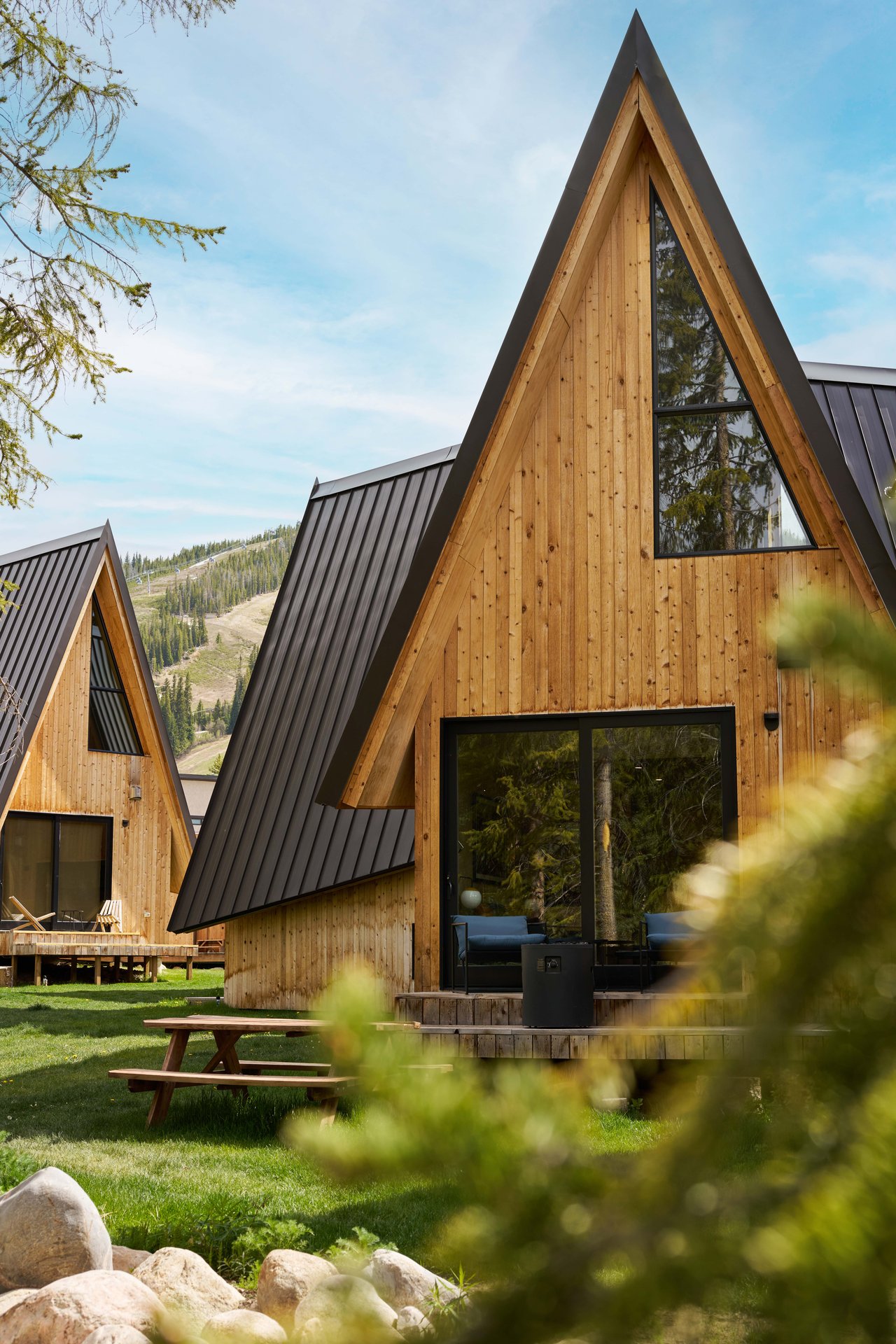
A-Frame Club consists of just 31 freestanding A-frame cabins in Old Town Winter Park, Colorado.
They combine the feel of a small private mountain cabin with a hospitality-oriented ownership model, professional management and amenities including hot tubs, sauna, cold plunge and an on-site bar and restaurant.
The ownership structure is different from buying a conventional Winter Park condo, which is exactly why understanding the financing, rental management, personal-use rules and potential tax considerations matters.
If you're considering one of the available cabins, I can walk you through the real-estate side of the equation and connect you with professionals who understand the financing and tax structure.
For buyers hoping to take advantage of a 2026 tax strategy, I would have that conversation before closing rather than waiting until tax season.
Important Tax Disclaimer
I am a Colorado real estate broker, not a CPA, tax attorney or financial advisor. Nothing here should be interpreted as tax, accounting or legal advice. Bonus depreciation, cost segregation, material participation, passive-activity rules and short-term rental taxation depend heavily on an individual taxpayer's circumstances. Buyers should consult qualified tax and legal professionals before making an investment decision based on potential tax benefits.
Frequently Asked Questions
Can an A-Frame Club cabin qualify for 100% bonus depreciation?
Potentially, but not simply because it is an A-Frame Club cabin. Certain qualifying components identified as shorter-life depreciable property may be eligible for 100% bonus depreciation under current law. The building and land should not be assumed to qualify in their entirety.
Does 100% bonus depreciation end in 2026?
No. Current federal law provides permanent 100% additional first-year depreciation for qualifying property acquired and placed in service after January 19, 2025.
Why is buying an A-Frame Club cabin in 2026 potentially unique?
Certain early buyers may have an opportunity to self-manage before the long-term management structure takes effect. Depending on the buyer's circumstances, that period could be relevant when analyzing material participation.
What is cost segregation?
Cost segregation is an analysis used to identify portions of a real-estate investment that may appropriately fall into shorter depreciation categories instead of being depreciated entirely with the building.
Can bonus depreciation offset W-2 or business income?
Potentially in some circumstances, but depreciation alone does not determine whether a loss can offset other income. Passive-activity classification, material participation and the taxpayer's individual circumstances are critical. A CPA should make that determination.
Does buying before December 31 guarantee a 2026 deduction?
No. Closing alone does not guarantee a particular deduction. Among other requirements, qualifying property generally needs to be placed in service, and the taxpayer must meet the applicable tax rules.
Should I talk to a CPA before buying?
If tax treatment is part of the reason you're considering the property, absolutely. Ideally that conversation should happen before closing so your CPA can evaluate ownership structure, timing, personal use, rental activity, cost segregation and material participation.